For our Short film we considered many different genres that we could include but we felt that the only ones that, while being realistic, we were able to do were; Romance, Comedy and Thriller. We ruled out genres such as action, historical, fantasy and Science-fiction for their sheer impracticality. The Romance and Comedy genres are very appropriate considering how they are classic examples of British cinema - same as thrillers. For our themes we in the end decided on the themes of immigration and the nature of life in London. We felt that they were relevant to the British people and the themes of British identity and society that are in the public spotlight at the moment.
Romance
This poster signifies that it is representing the romance genre as it has two people in a romantic embrace which is a conventional image for romantic movies. The targeted audience seems to be women of any age as the reddish colours seem to signify passion which would draw the women in.
Comedy
This poster shows how its part of the comedy genre by using some of the common themes. The fact that one guy is naked and all of the people smiling make it clear that this is a comedy. The apple pie on poster is also an iconic image, because of the hole in it. As the people on the poster are teenagers it clearly points the target audience as being teenage.
Thriller
This poster is clearly a poster for a thriller/horror film as the woman is clearly screaming. Additionally the dull colours show that this will not be an action movie.
Our themes would be relevant to an audience consisting of late teens/early 20s - especially the ones living in big cities such as London, Manchester, Birmingham etc. They explore current issues that affect people in their daily lives. Through our research we realised that short films are great vessels for short and coherent ideas that tackle issues of relevance. Following the right conventions of short films will allow us to put our point across in an effective manner. As outlined in our audience research the issue of practicality is very important as we will not be able to cover a film genre such as science-fiction as we do not possess either the technology or money to film such a movie.
Potential audiences for short films are quite wide depending on a number of factors and they are affected by several key elements; institutional implications in terms of funding and distribution, expansion of media as a whole leading to the expansion of short film audiences, intended audiences of the film makers, BBFC ratings also affect the audience that the shorts are aimed at.
Potential Audiences
Because of the considerable limitations that short films face due to often negligible budgets and limited distribution possibilities, they're limited in terms of audience that they are able to reach and the audience they are able to attract and watch their movies. Mainstream movies have budgets that are mainstream and are able to attract the huge mainstream audiences while short films with their limited budgets are only able to attract limited audiences as they're simply unable to provide the sort of effects that wide audiences are attracted and used to. Additionally the means of distribution for short films are completely different to mainstream movies which are distributed in cinemas in limited numbers while shorts are distributed on the internet but in huge quantities meaning that even though their easier to access, the large amount of choice that is present prevents many shorts from ever breaking through to a wider audience.
Types of Films
In the 1940s when a viewer went to a cinema while paying for the main A movie, he would also expect to see several shorter movies (usually serials) through this short(ish) films reached wider audiences. This doesn't happen anymore and even though the internet provides wider access only very limited audiences that look for them get to see short films. Thus although it is easier to access them now and it is also often for free - the audience has for short films has actually shrunk in the long run.
1940s Cinema
The intended audience for 'Veronqiue' was quite wide for short films as it wasn't artistic and it had quite a lighthearted romantic theme which due to the internet allowed it to go viral and reach a suprisingly large audience for a short film. The short 'Cherries' on the other hand was most likely aimed at schools and was intended to be shown there in order to provide social awareness about the themes that it puts forward. (State control and War weariness)
Short films would usually get the the age certificates aimed at older audiences usually 15 and above due to the hard themes that they usually tackle and engage with. It is quite rare for teenage audiences to engage with short films so the older age certificates are not in any significant way limiting the audience that watches short films. Short films are almost exclusively distributed on the internet and at festivals. The audience either disregards age certificates or when it goes to festivals it is usually 18 and above anyway so age certificates don't have any large impact on the audience that gets to see short films anyway.
Age Certificates
The above affects our audience as we had to make a decision whether to make an art film or a mainstream one and we finally decided that an art film would be more practical for us to make and the audience that we are likely to reach will be mostly interested in Art films. Because of our limited distribution possibilities we will only distribute our movie on the internet meaning that it is extremely unlikely that we will reach mainstream audiences. We're going to include themes that are relevant to a contemporary British audience and we would like to target late teens and maybe early 20s as our audience.
When looking at appropriate audiences for films the BBFC (British Board Film Classification) has to take into account movie content. This can be wide ranging, from language, visual content and the message that a particular film tries to get across. The BBFC certificates would affect Short films negatively because they are limiting the target audience. Short-films would mainly target their product at PG to widen their audience range; if they were to target another age group their film would be much more limited in aiming their film at wider audiences. Most of the films I have seen have all contained limited content, which seems to target the ages of 15 with themes such as Rom-coms and social realism in attempt to reach different audiences. As a form of education short films are most effective when targeting the age rating 12 or 15, this is because it can be shown to children, if it had an 18 certificate it would be useless as it couldn’t be shown to the people that need it.Within the short-film making community, there is a huge issue surrounding funding issues which prevent short-film makers to target a wider audience within the film industry therefore they are less successful. Short films will not appear in cinemas so most of them try and get their films played at film festivals to get noticed. Short films are also distributed through competitions and the internet. 'Sign Language' by Oscar Sharp was the winner of the Virgin shorts competition and so got its recognition through the competition which also helped promote the director.
Due to this research we will now try to aim for a lower BBF certificate like U or a PG to ensure that we can maximise our audience. Our film won’t strictly be an educational film however we still need to aim for a wider audience so that we can get our film noticed more. We will make sure that all the language and visual content is appropriate for this, our film is most likely to be a romantic comedy so this shouldn’t be too much of a problem.
There are different several different purposes for which short films are made as they are quite effective at putting across important ideas as well as showing film making skills.
Young film makers are often eager to gain experience while they are studying or trying to improve their film making skills. Short films are perfect for that task as they don't require huge budgets and don't put too much of a strain on a production crew. Young film makers who are trying to make their name in the movie business would also be eager to produce a movie that could be used as a calling card (like 'George Lucas in Love'.) Some established film makers may also want to try to experiment with a certain new idea or style of filming and to easily see whether it works they would usually produce a short film. A place where young filmmakers can showcase thier short films would be festivals such as the Sundance Film Festival.
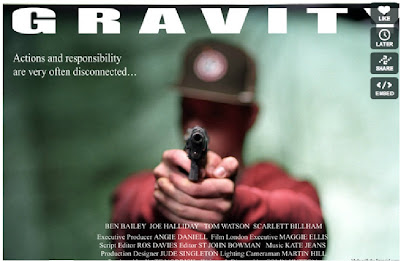
Another important reason why short films are made is to communicate a message. A film maker can make a point about a theme he believes in by producing short films. Because of their length and the freedom that is allowed for numerous new and engaging ideas, short films can put across a coherent and easily understandable message to a wide audience especially due to the development of the internet. 'Gravity' is a perfect example of a film maker making an important point about gun crime while also including an interesting exploration into the idea of consequences of your actions.
Short films differ hugely from mainstream feature length films in several regards. Short films are ready to tackle extreme and unpopular themes while mainstream movies are wary of that as they are ultimately out there to make a profit. This links to the point that mainstream films have quite large and considerable budgets while shorts have small budgets and they often have to make do with what they got. As outlined in my posts on conventions of short films, they follow certain conventions due to budget and time constraints while sometimes also experimenting with new and interesting film styles.
The purpose of the majority of short films produced every year is down to many different factors. The first factor is promotional reasons, a director/film maker want to get their names out in the industry and short films allow them to develop and show their skills. These films are entered into film festivals and compititions where they are promoted and are able to be seen by film companies and other directors and reach an audience. A great example of this would be Fede Alvarez and his short film ‘Ataque de Pánico’. He created this film using basic computer software to create C.G.I figure and spent $300. The film was watched by Sam Raimi director of Spiderman, who offered Fede a $30 Million budget to direct a film. http://news.bbc.co.uk/1/hi/technology/8417789.stm. Not only do the directors get promotion from their short film so do the usually amature actorst staring in them too. It gives the acters a chanse to learn their craft on a small scale before moving up to bigger things. The film “Veronique” stars James Buckley who later went to star in the hit series the Imbetweeners.
Another reason Short films are created is to educate. Short films deal with contemporary issues and this allows them to be used in school to help teach children about society and issues surrounding them such as racism and ethnicity, along with moral issues. In the short film “Cherries” by Tom Harper we see a group of students aged 16 trying to deal with issues such as bullying racism and control from higher powers (the army). The main plot of the film is that these 16 year old boys will have to go on compulsory national service incase the war goes on longer and more troops are needed, which would be unthinkable in the modern era we usually reserve those thoughts to history and World War 2. This film could be used in schools; it will definitely spark a discussion from 14, 15, and 16 year olds.
In the short film 'Gravity' the titles are important in terms of the double meaning that can be inferred from them - the first being that the bullet which comes down kills the little kid through the laws of gravity while the other meaning would be that people don't think of the gravity of their actions - which is also the theme that this short is trying to get across to its audience.
A second short that uses titles interestingly is "Double take" as it's presentation of them is quite different from 'Gravity'. The opening titles are very brief - making the movie seem to start much more abruptly. The end credits on the other hand have overlaid diegetic sound which actually serves to continue the narrative even though credits aren already rolling.
In our short film we could make the title of our movie have a meaning that links in well with the themes that our short would talk about. It would be similar to "Gravity's" titles but our title would only have a second meaning if we were sure that it would work well within the movie. Also brief opening titles would be preferable as it would mean that we don't waste too much time, which we don't have since our short film is limited to a 5 minute length.
Sign language is a short that provides an interesting example of sound, editing, cinematography and mise en scene - as utilised in short movies. It is a form of a 'mockumentary' that is filmed with handheld cameras that give it a more realistic(documentary) look making it fit the genre that the film is set in. The short also incorporates overexposed realistic lighting - all for the purpose of giving the movie a realistic look that does set it apart from most short films who lack that fully professional look - this short has the appropriate look for what it tries to present. This short film does have an open set which is quite unusual for feature films but for a short film it is appropriate.
'Veronique' is another really interesting example of the use of sound, editing, cinematography and mise en scene. The whole of the film's narrative is told through a voiceover - as opposite to having onset dialogue. This allows the director to produce a great contradiction between narrative and the image that is before the audience. The score is also used in a very interesting way since the movie has a 'French' theme it follows national stereotypes and is a 'pastiche' of French movies with the score fulfilling a very important role within the narrative of the short film as the voiceover tells the main characters thoughts.
The smart way in which 'Sign Language' is filmed, having an open set but not allowing it to be intruded upon by pedestrian's, is something that we would like to duplicate in our movie if we were to film our movie in an area that has a large number of people moving around (which usually makes it impossible to film in such areas.) The idea of using a voiceover instead of direct speech like in 'Veronique' is something that would make filming our movie much easier and would lead to a production of a more effective and high quality film.


 This poster is clearly a poster for a thriller/horror film as the woman is clearly screaming. Additionally the dull colours show that this will not be an action movie.